For millions of NRI families, one of the hardest parts of living overseas is watching an elderly loved one's memory and health decline from thousands of miles away. Long-distance caregiving for a loved one with dementia is emotionally demanding, but physical distance doesn't have to mean emotional or practical absence. With the right systems in place, families can stay genuinely involved in long-distance elder care in India, even while living in another country.
This guide covers what NRI elderly loved ones care in India actually looks like in practice: how to build a support network, how care needs shift as dementia progresses, how to choose between home care and residential care, and how technology and local partners can enable a form of remote dementia care that's geo-optimised around your elderly loved one's actual location, not yours.
Why Long-Distance Elder Care Needs a Different Approach
Dementia is a progressive condition that gradually affects memory, thinking, behaviour, communication, and the ability to manage daily life. As families spread across cities and countries for education and work, the early warning signs in an aging elderly loved one, a missed bill, a repeated question, confusion in a once-familiar market, can go unnoticed for months. Globally, the number of people living with dementia is projected to rise sharply over the coming decades, which makes structured, well-organised elder care more important than ever, especially for families managing it from a different time zone.
Caring for ageing elderly loved ones from abroad means you're rarely the first to notice a change. That's exactly why long-distance caregiving has to be built around other people on the ground, relatives, neighbours, doctors, and professional caregivers, rather than around your own visits alone.
Practical Ways to Support Dementia Care from Overseas
- Schedule regular calls. A fixed daily or weekly time makes calls part of your loved one's routine, which feels more reassuring than sporadic long conversations.
- Use video calls thoughtfully. Video helps you spot changes in appearance, mood, or the home, but switch to voice-only if it causes confusion or agitation.
- Build a local support network. Relatives, neighbours, friends, doctors, and caregivers nearby are the backbone of effective long-distance elder care in India.
- Keep one master contact list. Doctor, pharmacy, emergency services, caregiver, and nearby family — accessible to every family member.
- Track health changes systematically. Ask whoever is local to flag changes in eating, sleep, mobility, falls, mood, medication adherence, and hygiene.
- Manage medical logistics remotely. Schedule appointments, maintain digital medical records, arrange refills, and liaise with doctors directly when possible.
- Prepare for emergencies in advance. Ensure someone nearby has emergency contacts, key documents, medical history, and a spare key.
- Split responsibilities among family. Long-distance caregiving works best as a shared effort, not one person's burden.
- Arrange local services. Meal delivery, housekeeping, transport, physiotherapy, or day-care can fill gaps you can't cover remotely.
- Check in on the primary caregiver too. If one relative or hired caregiver carries daily responsibility, ask how they're coping and help arrange breaks.
As dementia progresses, family and informal help alone often aren't enough. Bringing in professional caregivers or a nursing agency ensures consistent supervision, proper medication management, and trained handling of behavioural or medical changes, support that's hard to replicate from overseas or through occasional local help alone.
The most effective NRI elder care setups in India treat communication as a system - regular contact, centralised information, professional support where needed, and periodic reassessment as needs change.
How Care Needs Change as Dementia Progresses
Dementia doesn't look the same on day one as it does years later, and the stages below are a general guide rather than a fixed timeline.
Early Stage: Supporting Independence
At this point, your elderly loved one may still manage daily life largely on their own, but benefits from reminders and light supervision.
- Accompanying them (or arranging someone to accompany them) to medical appointments
- Setting up medication reminders or supervised dosing
- Keeping an eye on bill payments and financial decisions
- Checking they can still cook, shop, bathe, and get around safely
- Labelling important items and writing out simple daily routines
- Discussing legal, financial, and healthcare preferences while they can still weigh in
- Encouraging exercise, social contact, and activities they enjoy
The goal here is support without taking over, preserving independence while quietly reducing risk.
Middle Stage: Building a Daily Support System
Memory and judgement issues become more visible, and help is usually needed with dressing, meals, medication, and running the household.
- Daily or near-continuous supervision
- Help with personal care and meals
- Regular checks for falls, wandering, or unsafe behaviour
- A predictable, consistent daily routine
- Support with communication and appointments
- Supervision during walks and physical activity
- Professional home care, day-care, or residential care where needed
Home safety becomes a priority: better lighting, grab bars, non-slip flooring, secured medicines, and fewer hazards within reach.
Late Stage: Full-Time, Comfort-Focused Care
Communication, walking, eating, and recognising people all become significantly harder, and continuous assistance is usually required.
- Full-time personal and nursing care
- Help with feeding, hygiene, repositioning, and continence
- Monitoring for pain, infection, dehydration, pressure injuries, and swallowing difficulty
- Gentle physiotherapy or movement as advised by a doctor
- Comfort-focused, emotionally reassuring care
- Ongoing conversations with the medical team about advance care preferences
At every stage, the aim stays the same: dignity, comfort, safety, and connection.
How to choose the right care setting for your loved ones when you’re far away?
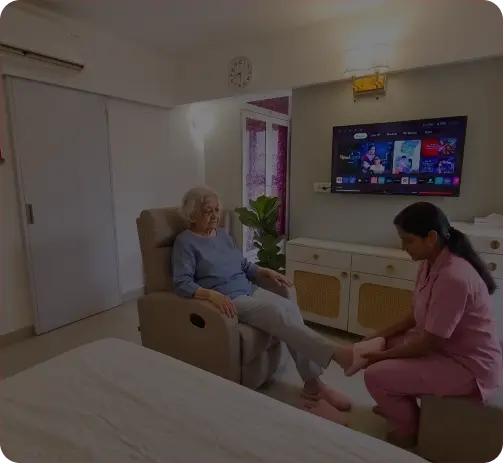
There's no universal answer here, the right setting depends on your elderly loved one's health, stage of dementia, safety needs, personal preferences, finances, and the reliability of available caregivers. Home care works well when your elderly loved one is comfortable in familiar surroundings and has a dependable support system nearby. A trained caregiver can help with meals, hygiene, medication, mobility, housekeeping, and companionship. But home care shouldn't mean long stretches of being alone, if falls, wandering, missed medication, or isolation are recurring issues, one caregiver may not be enough.
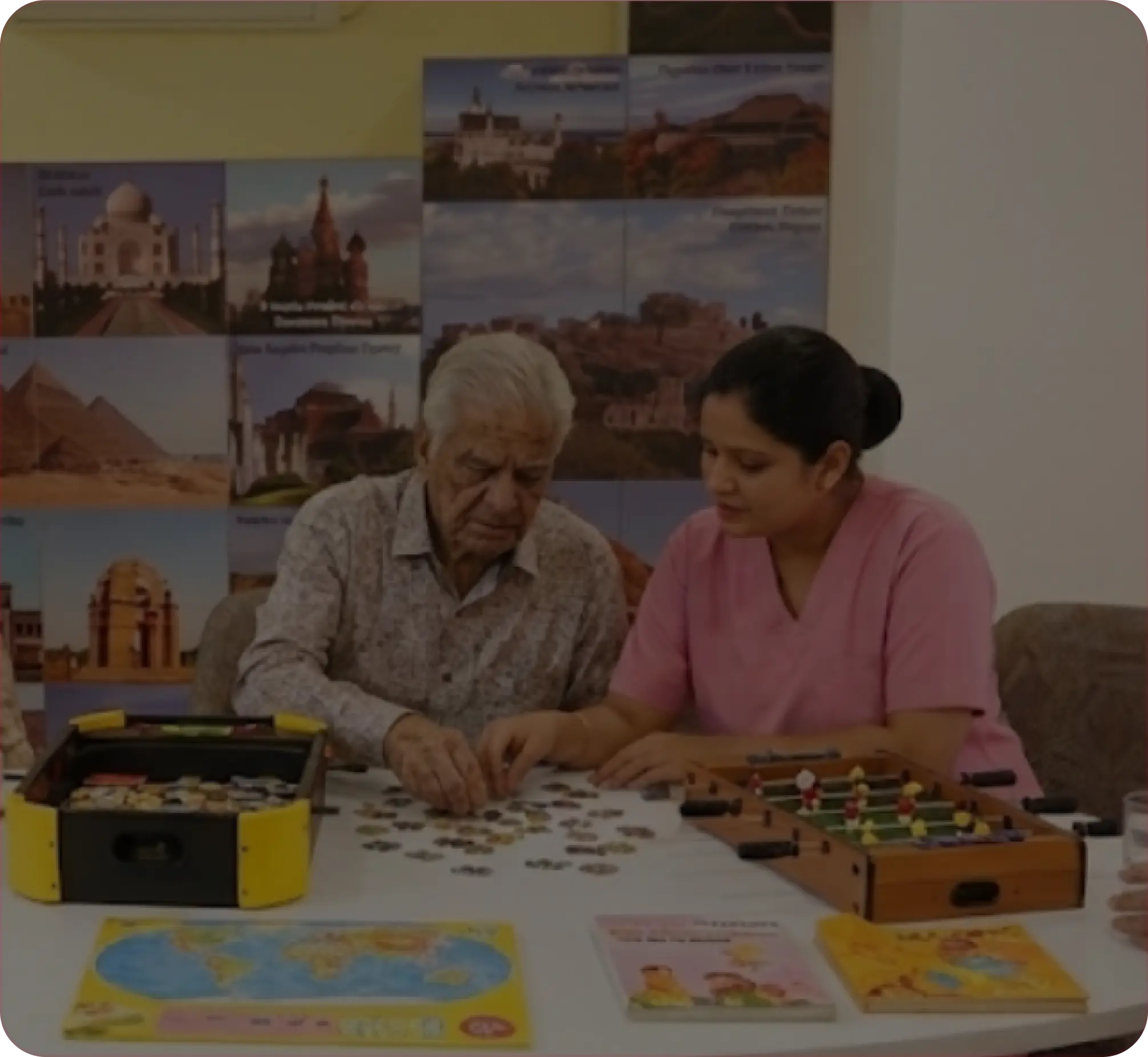
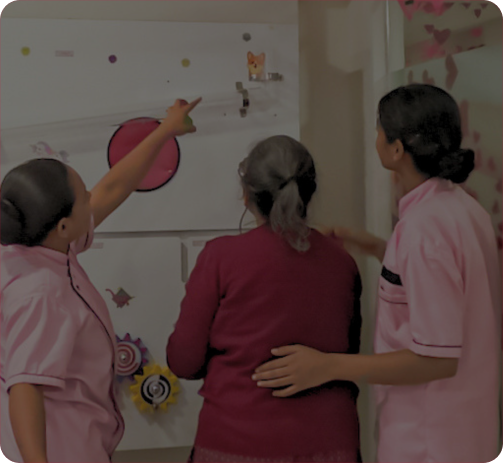
Residential care becomes worth considering when continuous supervision, structured routines, or regular nursing support are needed. Good facilities also offer social interaction, group activities, and cognitive stimulation, which can genuinely reduce isolation compared to living alone. Before choosing one, look closely at staff training in dementia care, medical support, emergency protocols, hygiene standards, daily activities, safety measures, and, critically for long-distance caregiving, how well they communicate with family overseas. Distance shouldn't be the deciding factor. Safety, compassion, and the ability to meet changing needs should be.
How Often Should You Visit?
There's no fixed rule, and it depends on your elderly loved one's stage, current care arrangement, health, and your relationship. Where possible, plan visits on a predictable schedule rather than only in response to emergencies. During each visit:
- Observe changes in walking, weight, mood, hygiene, speech, and memory
- Talk directly with the caregiver and any medical staff involved
- Review medications, upcoming appointments, and recent concerns
- Walk through the home for new safety risks
- Spend unhurried, meaningful time together
Between visits, scheduled calls, video chats, photos, and visits from trusted relatives can maintain the same sense of predictability that makes remote dementia care feel less remote.
Small Things That Make a Real Difference
- Build a reminiscence album with labelled photos of family, familiar places, and meaningful memories, and let your elderly loved one lead the conversation around it.
- Improve home safety: better lighting, no loose rugs, grab bars, labelled rooms, secured medicines, visible emergency info.
- Keep routines familiar: consistent meal times, sleep schedules, calls, and visits.
- Bring familiar comforts: favourite music, a soft shawl, family photos, familiar scents.
- Choose simple, shared activities: music, folding laundry, watering plants, a short walk, tea together.
- Build a real relationship with caregivers, respectful communication and regular updates make them true partners in care, not just hired help.
- Focus on connection over testing memory. Skip "do you remember me?" and lean into feelings, music, food, and shared experiences instead.
- On video calls, show your face clearly, speak slowly, and involve your elderly loved one in a small shared activity rather than expecting a long conversation.
Your elderly loved one may not remember the specific visit or call afterward, but the warmth and comfort of that moment still matter.
The Bigger Picture
Long-distance caregiving was never meant to be a solo effort. Effective caring for aging elderly loved ones from abroad comes down to building a reliable network of people on the ground, staying informed through regular updates, making thoughtful decisions at each stage, and helping your elderly loved ones feel safe and valued, even when you can't be there in person. With the right planning, communication, and local partners, NRI elderly loved ones' care in India can be just as attentive and dignified as care delivered from next door.
Sources
- World Health Organization, Dementia fact sheets and global burden reports
- Alzheimer's Association, Long-Distance Caregiving resources
- National Institute on Aging (NIA), Alzheimer's Caregiving Home Safety Tips
- Alzheimer Society of Canada, Long-Distance Caregiving guides