When we think about caring for someone living with dementia, our minds often go straight to medication schedules, cognitive therapies, and clinical protocols. And while those elements are undeniably important, they are only one part of a much larger picture. The environment in which a person with dementia lives, the walls, the light, the smells, the objects on a shelf, plays a profound and often underestimated role in their quality of life, their sense of safety, and their emotional well-being. Dementia-friendly design is not about building a hospital. It is about building a home, one that speaks gently to a mind that is slowly losing its ability to interpret the world around it.
What are the medical aspects of dementia care?
When someone we love is diagnosed with dementia, the first instinct is to focus on what medicine can do, and rightly so. Dementia is an umbrella term for a group of conditions that gradually affect memory, thinking, behaviour, and the ability to manage everyday life.
As it progresses, the person may begin to feel lost in spaces they once knew, struggle to find words, or feel anxious in environments that feel unfamiliar or overwhelming. Understanding this is the first step to truly caring for them.
Medical care for dementia typically includes:
- Pharmacological support to manage symptoms and slow progression
- Regular cognitive assessments to track changes and adjust care accordingly
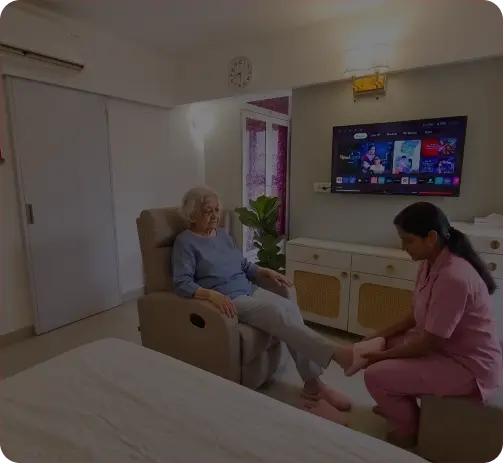
- Physiotherapy to maintain strength, balance, and mobility
- Occupational therapy to support independence in daily tasks
- Nutritional care to ensure the body is as supported as the mind
- Fall prevention measures to keep residents safe
- Management of co-existing conditions such as diabetes, cardiovascular disease, and depression, because dementia rarely arrives alone
But here is something no prescription can fix: a space that confuses, frightens, or disorients. Even the most carefully managed medical plan can only do so much if the environment itself is working against the person. This is where design stops being about aesthetics and becomes an essential part of care.
How does the environment play a role in dementia care?
We don't always think of a room as something that heals. But for someone living with dementia, the space around them is constantly communicating, and what it says matters more than we realise. Years of research in person-centred dementia care have shown us that the physical environment has a direct and measurable impact on how a person feels, behaves, and moves through their day.
A space that isn't designed with dementia in mind can:
- Escalate confusion by presenting too many visual or sensory signals at once
- Increase agitation through poor lighting, unfamiliar layouts, or disorienting patterns
- Reduce autonomy by making simple navigation unnecessarily difficult
- Worsen mood by feeling clinical, cold, or disconnected from anything familiar
On the other hand, a thoughtfully designed space can:
- Ease anxiety by feeling safe, warm, and predictable
- Encourage movement through clear pathways and inviting common areas
- Support daily functioning by making the environment intuitive to navigate
- Slow the progression of certain behavioural symptoms simply by reducing daily stress on the mind
So the real question is, what does it actually look like when a space is built with dementia in mind? What goes into it, and why does it make such a difference?
Why is proper lighting important in dementia care and creating a dementia-friendly space?
If there is one element of dementia-friendly design that quietly does the most work, it is lighting. Not the most obvious choice, perhaps, but once you understand how a person with dementia experiences the world visually, it becomes impossible to overlook.
Dementia often disrupts the body's internal clock, the circadian rhythm that tells us when to sleep, when to wake, and when to simply feel at ease. When that rhythm is thrown off, sleep becomes fragmented, nights feel frightening, and days feel disorienting. The right lighting environment can gently recalibrate this, mimicking the natural arc of daylight, with brighter and cooler light in the mornings that gradually softens and warms as the evening draws in.
And it goes beyond sleep. A shadow on the floor can look like a hole. A dimly lit hallway can feel like a threat. Glare bouncing off a window can make a familiar room feel suddenly strange and unsafe. For someone whose brain is already working overtime to make sense of the world, these are not minor inconveniences; they are genuinely distressing experiences.
Dementia-friendly lighting focuses on:
- Consistent, even illumination, so there are no harsh contrasts or startling pockets of darkness within living spaces
- Gentle night lighting in corridors, bathrooms, and bedrooms to guide residents safely during those wakeful nighttime hours
- Maximising natural light through open layouts and large windows, sunlight does things artificial light simply cannot, from lifting mood to naturally supporting the body's sleep-wake cycle
- Colour temperature that shifts through the day, energising in the morning, calming by evening, always working with the body rather than against it
Because good lighting isn't just about visibility. It's about what the light says to the brain, and whether it says you are safe, you are home.
What is the importance of colour, contrast, and wayfinding in dementia-friendly spaces?
Most of us walk into a room and instinctively know where everything is. The bathroom door, the dining table, and the chair we always sit in. For someone living with dementia, that instinct quietly fades, and the world becomes a series of surfaces that blur into one another, edges that disappear, and spaces that no longer make immediate sense. This is where colour steps in, not as decoration, but as direction.
Dementia affects the brain's ability to distinguish between certain colours and accurately perceive depth. What looks like a clearly defined space to us can look flat, confusing, or even invisible to someone whose visual processing has been altered. The solution isn't complicated, but it is specific.
Here is what thoughtful use of colour actually looks like in practice:
- High contrast surfaces help define where one thing ends and another begins.A brightly coloured toilet seat against a white wall, or a distinct floor colour in the bathroom, can be the difference between a space that is usable and one that is completely disorienting
- Coloured crockery on a white tablecloth is a small change with a surprisingly significant impact, when residents can actually see their food and plate clearly, nutrition and mealtimes improve
- Distinct door colours and visual landmarks such as murals, artwork, or a familiar object placed near a key room help residents navigate independently, holding onto their sense of direction and dignity without needing to ask for help
- Avoiding busy patterns on carpets, wallpapers, or upholstery is equally important. Heavily patterned surfaces can appear to move, creating the illusion of objects on the floor and increasing the risk of falls and anxiety
Colour, used well, gives someone back something dementia tries to take, the quiet confidence of knowing where they are and where they are going.
How do familiar objects from the past help elders with dementia?
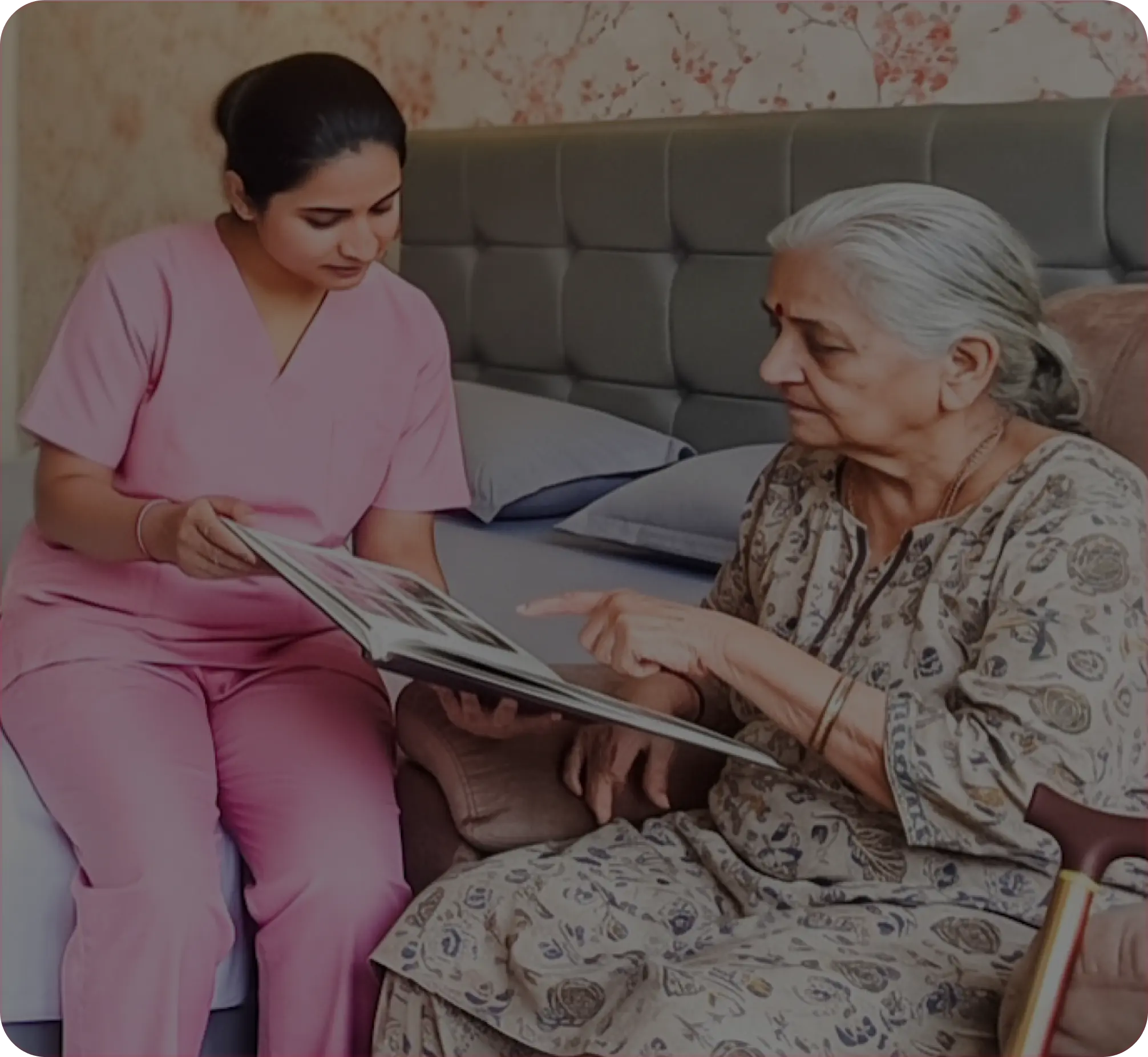
There is something quietly remarkable about the way memory works in dementia. It does not erase everything at once, nor does it fade in a straight line. Long-term memory, the decades-old kind, and emotional memory often stay surprisingly intact, even as short-term recall slips away. Which means that a song from the 1960s, the smell of a particular soap, or the weight of a familiar object in someone's hands can reach them in ways that a brand-new environment simply cannot. This is not sentimentality. It is neuroscience. This approach is known as reminiscence therapy, an evidence-informed practice that stimulates neural pathways and has shown measurable benefits for mood, memory, and overall cognitive functioning.
Familiar things have the power to:
- Ground and orient a person who is feeling lost or confused, by connecting them to a version of themselves they still recognise
- Reduce agitation and anxiety with a cherished photograph on the wall, a favourite armchair, a well-worn trinket on the bedside table, which can make an unfamiliar place feel like home
- Unlock conversation and connection, such as a caregiver who notices a resident light up at an old clock or reach for a familiar book, is witnessing memory doing what medicine sometimes cannot
- Activate positive emotional recall through objects, images, music, and even scents tied to meaningful moments in a person's past
Many thoughtful elder care environments now go a step further, creating dedicated reminiscence spaces, entire rooms designed to evoke a particular era, filled with visual cues, music, and everyday objects from the 1950s, 60s, or 70s. These spaces are not nostalgic displays. They are therapeutic environments, carefully built to stir positive memories, ease distress, and give residents a place where the past feels present in the gentlest possible way.
At Epoch, this belief shapes how we think about every corner of our space, not as a backdrop to care, but as something that actively participates in it. Because sometimes, the most powerful thing in a room is not a medication or a therapy plan. It is a photograph. A song. Something that says, we remember who you are, even on the days you cannot.
How do sound, smell and other sensory stimulation help in dementia?
So much of dementia-friendly design conversation centres on what we can see: the lighting, the colours, the layout. But for someone whose brain is working hard just to make sense of the world around them, every sense is either a source of comfort or a source of overwhelm. And the ones we tend to forget, sound and smell, are often the most powerful of all.
Sound, in particular, is something many care environments get quietly wrong. A television blaring in a communal lounge that nobody is really watching. The sharp clatter of a kitchen echoes down a hard-floored corridor. The constant ambient noise of a busy facility. For a brain already struggling to filter and process sensory information, this kind of environment is not just uncomfortable; it is exhausting, and it shows up as agitation, withdrawal, and distress.
A thoughtfully designed sound environment includes:
- Softer acoustics through carpeting, curtains, and acoustic panels that absorb sound rather than bounce it
- Quieter common areas where residents can simply sit without being assaulted by noise
- Intentional use of music, not background filler, but carefully chosen songs tied to a resident's personal history and era, played at the right moment and the right volume
Music deserves a mention of its own. It reaches people in advanced stages of dementia in ways that words and even faces sometimes cannot. It reduces agitation, shifts mood, and unlocks autobiographical memories that seemed completely out of reach, because music lives in a part of the brain that dementia is often slowest to touch.
And then there is smell, perhaps the most underestimated sense of all:
- Familiar scents like a particular soap, the smell of freshly baked bread, or a specific flower can transport a person decades into the past in an instant
- Aromatherapy used intentionally within care routines can ease anxiety and support sleep in ways that feel gentle and natural
- Sensory gardens that engage residents through fragrance, texture, and touch offer a kind of stimulation that is grounding, joyful, and deeply human
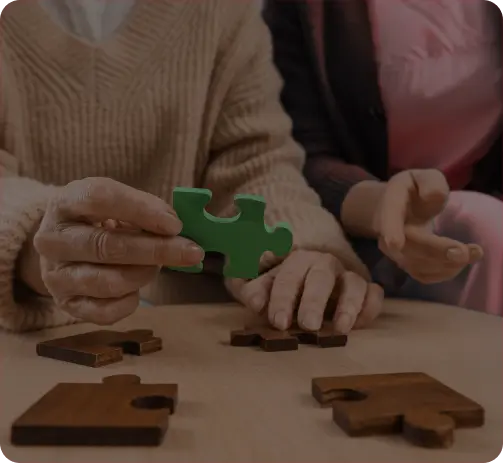
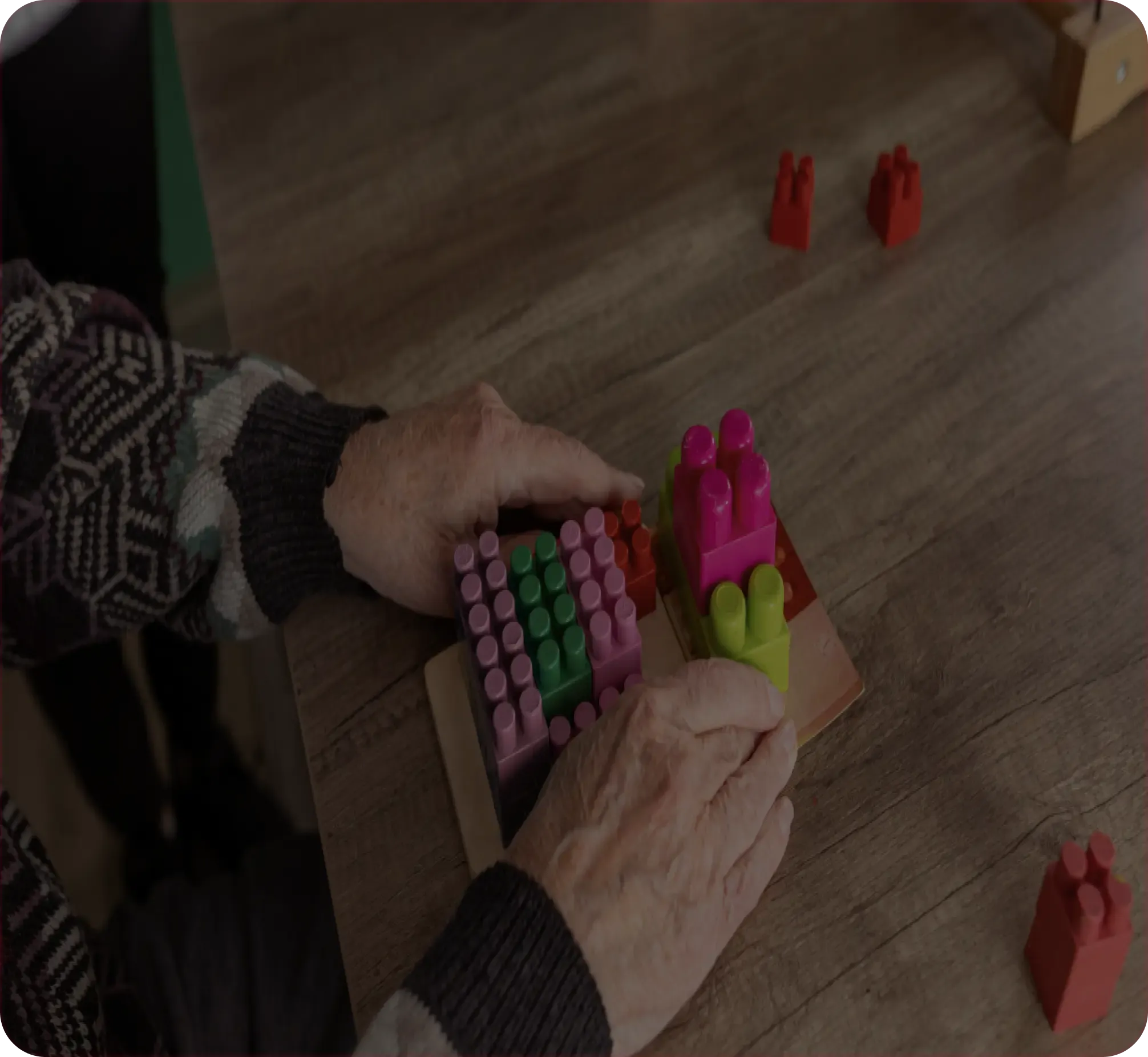
- Sensory stimulation boards are designed using varied textures, interactive elements, and meaningful activities to support motor, sensory, and cognitive engagement. Simple brain exercises, hands-on activities, and sensory experiences can play an important role in maintaining functionality.
Because sometimes, what brings a person back to themselves is not a clinical intervention. It is a smell that takes them home.
The human environment: staff, routine, and relationships
You can get every design element right, the lighting, the colours, the familiar objects, the sensory garden, and still fall short if the human environment does not match. Because at the end of the day, what a person with dementia needs most is not a perfectly designed room. It is a familiar face. A predictable morning. Someone who knows how they take their tea. The people and rhythms of a care environment are not secondary to its physical design. In many ways, they are the design.
Consistency, in particular, is everything:
- Familiar faces reduce the daily anxiety of encountering strangers in an already confusing world
- Predictable routines give the day a shape that feels safe and navigable, even when memory cannot fill in the gaps
- Stable caregiver relationships build the kind of trust that makes personal care feel less like an intrusion and more like a partnership
- Low staff turnover ensures that the people who know a resident, really know them, are there consistently, not replaced by someone new every few weeks
Training matters just as deeply. A well-trained caregiver understands something that changes everything: that behaviours which look challenging on the surface are almost always communications underneath. Wandering is not aimlessness; it may be a search for something familiar. Repetitive questioning is not stubbornness; it is anxiety seeking reassurance. Resistance to personal care is not defiance; it may be fear, or pain, or simply not recognising the person standing in front of them.
A person who asks for their mother every morning is not being difficult. They are telling you they need to feel safe. A dementia-friendly environment, and the people within it, respond to that need, not the behaviour.
And beyond all of this is something even more fundamental, truly knowing the person:
- Life story work that captures who someone was before dementia, their career, their passions, their family, their humour, and uses that knowledge to shape how they are cared for every single day
- Family involvement in care planning so that the people who love the resident are partners in their care, not visitors to it
- Meaningful engagement tailored to what actually matters to that individual, not generic activities, but moments that connect them to who they are and what they have always loved
Because person-centred care is not a philosophy that lives in a handbook. It lives in the small moments, in a caregiver who remembers that a resident was once a schoolteacher and hands them a book, or notices they seem calmer after a particular song. It lives in choosing, every single day, to see the person and not just the condition.
Why are dementia-friendly spaces an important aspect of the elder care ecosystem?
This is not a niche conversation. It is an urgent one.
India is facing a dementia care crisis that is growing quietly but rapidly. The Alzheimer's and Related Disorders Society of India estimates that over 8 million people in the country are currently living with dementia, a number that will only climb as the population ages. And yet, awareness of dementia-friendly design remains limited. The gap between what clinical care offers and what the environment provides is a gap that needs to be covered in all situations to ensure that all individuals with dementia live with the best care possible.
The consequences of getting this wrong are not abstract:
- More falls in spaces that were never designed with failing depth perception or visual confusion in mind
- Higher dependence on sedative medication to manage agitation that a better environment could have prevented in the first place
- Increased depression and withdrawal in spaces that feel cold, disorienting, or completely disconnected from anything familiar
- A faster loss of independence when the environment offers no support for the person to navigate, function, or engage on their own terms
And the consequences of getting it right are equally real:
- Fewer behavioural symptoms when the space itself reduces daily confusion and sensory overwhelm
- Better sleep when lighting and routine work together to support the body's natural rhythms
- Greater engagement with daily life when the environment invites participation rather than passive existence
- A measurable, meaningful improvement in quality of life, not just comfort, but genuine wellbeing
Because there is a profound difference between a life that is managed and a life that is meaningfully lived. Dementia-friendly design is what stands between the two, and in a country where millions of families are navigating this journey, often without guidance or support, it is time we started treating it with the seriousness it deserves.
A final thought
A truly dementia-friendly space is never just one thing. It is not a checklist of medical requirements, nor is it simply a pretty room filled with old photographs. It is the careful, intentional blending of everything, the right light at the right time of day, a familiar object on a familiar shelf, a corridor that makes sense, a face that is always there, a routine that holds steady even when memory does not. Because what we are really designing for is peace.
The quiet, deep kind, the kind that comes from living in a place that understands you, anticipates you, and was built with you in mind. A place where the environment itself says: you belong here, you are known here, you are safe here. For our elders living with dementia, that is not a luxury. It is the very foundation of dignified, compassionate care, and it is what every space they call home should strive to be.