There's a particular kind of silence that settles over families when an elderly loved one receives a serious diagnosis. Nobody wants to say the word "palliative" out loud because, somewhere along the way, it started to sound like a synonym for giving up. It isn't. But that misunderstanding keeps too many families from getting support they - and the people they love - genuinely need, often for months or years longer than necessary.
This isn't here to pretend any of this is easy, or that these conversations don't hurt. They do, and they're allowed to. What this is here to do is walk through why palliative care matters, what the stigma around it gets wrong, how families can approach this transition with a little more clarity, and what your role in all of it truly looks like - because it's a bigger, more meaningful role than most people realise.
Rethinking Palliative Care: Breaking the Stigma That Holds Families Back
Before going any further, it helps to name something first: the hesitation many families feel, even discomfort at hearing the word "palliative," is completely normal. Most people carry the same idea - that it's only for when there's nothing left to do. That's simply not true, and it's worth sitting with that for a moment. A few things worth understanding:
- Palliative care can begin the moment comfort, independence, or peace of mind starts being affected - not only at the very end
- It can continue for years, quietly working alongside active treatment, whatever form that treatment takes
- Someone can be undergoing chemotherapy, dialysis, or recovering from surgery, and still be supported by palliative care at the very same time
- Choosing it isn't a decision about how much time is left - it's a decision about how that time is lived
The hesitation itself makes sense, too. Nobody wants to associate someone they love with an ending. Talking about comfort can feel, wrongly, like admitting defeat - like something has already been decided, when it hasn't. But it helps to see it differently: choosing palliative care isn't choosing to stop fighting. It's choosing to fight differently - for quality of life, not just the number of days left in it. In practice, that often means fewer unmanaged symptoms, fewer frightening trips to the emergency room, and more days that genuinely feel like living, not just enduring.
What to look for in palliative care for your loved ones?
Choosing palliative care for a loved one is an emotional decision, and knowing what to look for can make the process feel more manageable. Start with the care team's expertise. Look for a program staffed by doctors, nurses, and counsellors trained specifically in palliative or hospice care, since managing pain and symptoms effectively requires specialised knowledge, not just general medical care.
A truly patient-centred approach matters just as much. The right program treats your loved one as a whole person, addressing physical symptoms alongside emotional, social, and spiritual needs, rather than focusing narrowly on the illness itself. Communication is another key factor. Good palliative care teams take time to explain options clearly, listen to your family's concerns, and involve you in every decision, so you never feel left out of the process.
Consider these practical points as well:
- Availability: Does the team offer 24/7 support for emergencies or sudden changes in condition?
- Flexibility of setting: Can care be provided at home, in a hospital, or in a hospice facility, based on what your loved one prefers?
- Family support services: Are counselling, respite care, or support groups available for family caregivers, who often carry significant emotional and physical strain?
- Coordination with other doctors: Does the palliative team communicate well with your loved one's existing specialists to avoid conflicting treatment plans?
Finally, trust your instincts. A good palliative care provider will feel compassionate, transparent, and respectful of your family's values and wishes, especially around difficult conversations regarding prognosis and end-of-life preferences.
How to have a conversation about palliative care with your loved ones and family?
There's rarely a perfect moment to bring this up, and waiting for one usually just means waiting indefinitely. It helps to choose a calm, unhurried setting instead - not a hospital corridor after a hard diagnosis, but a quiet evening at home, when there's enough emotional room for everyone to actually listen.
A few things that tend to make this gentler:
- Frame the conversation around comfort, not decline - "we want to make sure you're comfortable and supported, whatever comes next" tends to land very differently from "we need to talk about what happens if things get worse," because it genuinely is different
- Include the loved one directly in the conversation, rather than deciding on their behalf - a serious diagnosis can take away a great deal, but it shouldn't take away someone's right to be part of decisions about their own care
- Bring in a doctor or palliative care specialist where possible - sometimes, hearing certain things from someone outside the family, with no emotional stake and just clarity and experience, makes the information easier to sit with
- Let it unfold across several conversations, not one - understanding tends to grow slowly, in layers, rather than arriving all at once
None of this needs to be said the first time perfectly. What matters more is that the conversation stays open, and that it comes from a place of comfort and care, not fear.
How to transition towards residential palliative care?
Once a family decides to explore palliative care, the transition tends to unfold gently, in a few clear stages - not all at once, and not without support along the way. It usually begins with an honest conversation with the treating doctor about symptoms, prognosis, and what support is available. Many families don't realise this can be requested directly, rather than waiting for a referral to be offered.
What this transition often looks like:
- A care team steps in - doctors, nurses, counsellors, and social workers - working alongside existing doctors, not replacing them
- Pain and symptom management is usually addressed first, since unmanaged physical discomfort makes everything else harder to sit with, for the patient and the family alike
- Conversations around emotional wellbeing, daily routines, and practical logistics - caregiving schedules, finances, home adjustments - begin to take shape alongside this
- If home care isn't feasible, or additional daily support is needed, an assisted living or dedicated care facility often becomes part of this picture
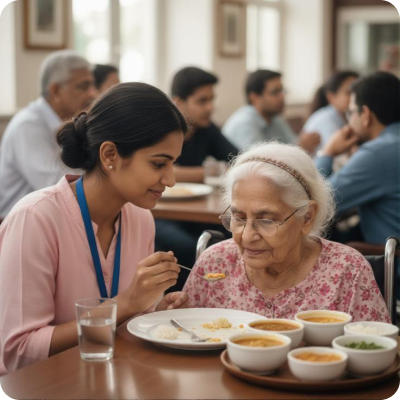
A good facility offers far more than medical management alone - daily comfort routines, nutrition suited to changing appetite, mobility support, and a warm, unhurried environment that still feels like living. Choosing the right place matters more than families often expect, and it's worth asking careful questions before deciding, not after. None of this needs to happen all at once. Families are allowed to move at their own pace, adjusting as needs change, and revisiting decisions as understanding grows.
What is your role in this journey of palliative care for your loved ones?
Here's something that often goes unsaid: palliative care isn't just for your loved one. It's for you too. Families carry an enormous, often invisible weight through moments like these - the constant vigilance, the hard decisions, the quiet grief that starts settling in long before anything else does. Palliative care exists to help hold some of that weight, not just for your loved one, but for you. There are a few things that you must always keep in your mind when you are on this journey.
- Emotional support and counselling are usually available to family caregivers too, not just the patient
- Looking after someone else well becomes nearly impossible while running on empty yourself
- There is no need to have all the answers, or to manage every moment perfectly
- Presence matters more than perfection - showing up, asking questions, and advocating gently for your loved one's comfort and dignity
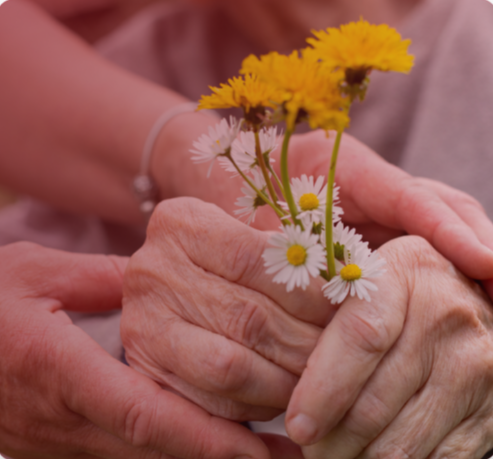
Showing up doesn't need to look dramatic or perfectly planned. Often, it's the smaller, quieter things that mean the most - and it helps to remember that showing up isn't about doing everything right; it's simply about being present, again and again. A few ways this can look, day to day:
- Sit with them without needing to fill every silence - presence doesn't always require conversation
- Ask what they need, rather than assuming - comfort looks different for everyone, and preferences can shift day to day
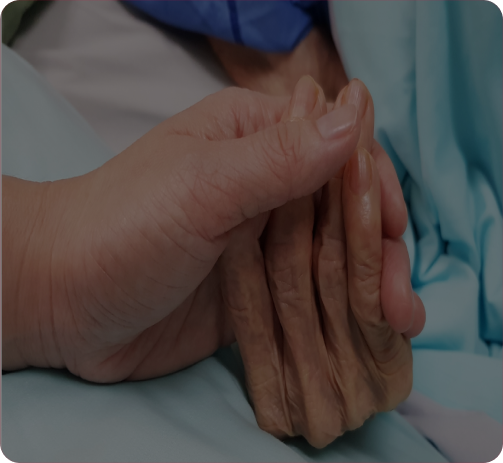
- Hold their hand, literally or figuratively, through appointments or difficult conversations, so they don't have to face them alone
- Keep some normalcy alive - a familiar routine, an old song, a favourite meal - these small threads of everyday life still matter deeply
- Let them talk about fear, memories, or anything else on their mind, without rushing to fix or reassure - sometimes being heard matters more than being comforted
- Ask for help when it's needed, from other family members, friends, or the care team - showing up for someone doesn't mean carrying everything alone
- Allow space for good days and hard days both, without expecting either to look a certain way
It's alright to feel exhausted. It's alright to not always know what to do next. None of that makes anyone less capable of holding their family through this - it simply makes them human. And being human, fully and honestly, is often exactly what the people around them need most.
Acknowledging Your Strength - A final note for families and caregivers
For anyone reading this because their loved one may need palliative care, it's worth pausing to notice something: this is already difficult, and it's being done out of love. Asking questions about palliative care, sitting through uncomfortable conversations, making decisions with no easy answers - none of this is small. It takes a certain kind of strength to keep showing up for someone, day after day, even when it feels impossible to do so. Palliative care, at its heart, isn't about preparing for an ending. It's about honouring a life fully, for as long as it continues - and honouring the people walking alongside that life, every step of the way. It's about dignity, about being seen and respected as a whole person, and about celebrating a life rather than simply managing an illness - finding moments of joy and connection even within difficult days.
No one has to carry this alone. At Epoch, this is exactly what we believe in - person-centred care built around your loved one's story, not a one-size-fits-all plan, delivered by a team trained specifically in palliative and holistic care, with support that extends to the whole family and adapts to wherever your loved one feels most comfortable. Simply asking these questions, simply caring enough to look for the right kind of support, already says something quiet and true about the care being given. If this resonates with you, we're here - to share the care, and to walk this journey with you.