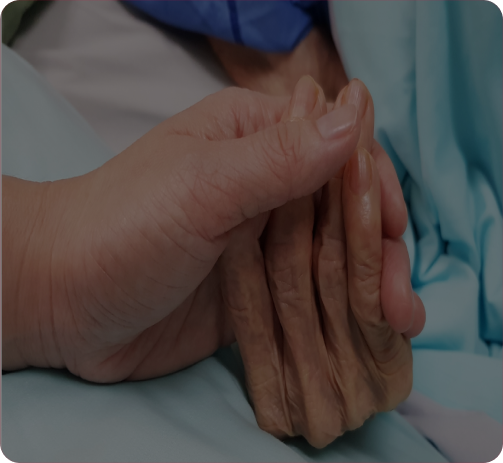
Few pairs of words in healthcare get confused as often as "palliative care" and "hospice care." Families hear both terms, sometimes in the same conversation with the same doctor, and walk away unsure whether they mean the same thing or something entirely different. That confusion isn't a small detail - it can shape when a family decides to ask for support, and how they understand what that support actually means. This piece is here to gently untangle the two, so that the choice, when it comes, feels informed rather than uncertain.
What is palliative care?
Palliative care is specialised support for anyone living with a serious condition - advanced heart disease, cancer, dementia, Parkinson's, and many others. Its purpose is to ease pain, manage symptoms, and lighten the emotional weight that so often comes with prolonged illness, regardless of what stage that illness is at.
A few things worth knowing about palliative care:
- It can begin at any point after a serious diagnosis, not just near the end
- It can run alongside active, curative treatment - chemotherapy, dialysis, surgery - for years at a time
- It looks at the whole person, addressing physical, emotional, social, and spiritual wellbeing together
- It is delivered by a team - doctors, nurses, counsellors, social workers - working alongside existing doctors, not replacing them
In short, choosing palliative care is not a decision about how much time is left. It is a decision about how that time, however long it turns out to be, is actually lived.
What is hospice care?
Hospice care, by comparison, is a more specific and time-bound form of support. It is typically reserved for the final phase of a life-limiting condition, usually once a doctor estimates a prognosis of six months or less, and once curative treatment has been stopped altogether. At this stage, the focus shifts fully toward comfort - not because there is nothing left to offer, but because comfort itself becomes the priority.
A few things worth knowing about hospice care:
- It is generally introduced only in the final stage of an illness, once treatment aimed at recovery has ended
- It focuses entirely on comfort, dignity, and quality of life, rather than prolonging life through active treatment
- It can be provided at home, in a hospice facility, or within a care home, depending on the family's circumstances
- It includes strong emotional and practical support for family members, both during this time and afterwards
What is the difference between hospice care and palliative care?
Perhaps the simplest way to understand it: hospice care is a smaller, more specific part of the much larger picture that palliative care represents. All hospice care is palliative in nature, but not all palliative care is hospice care.
The difference tends to come down to three things:
- Timing - Palliative care can begin at any stage of a serious diagnosis, sometimes years before the end of life. Hospice care begins only in the final phase, typically within a six-month prognosis.
- Treatment - Palliative care can be given alongside curative treatment. Hospice care begins once that treatment has stopped entirely, with comfort as the sole focus.
- Scope - Palliative care is broad and flexible, adapting to a person's needs as a condition progresses. Hospice care is narrower by design, focused specifically on end-of-life comfort and support.
Daily care in hospice vs. palliative care: what's the difference?
Beyond definitions, it helps to understand what day-to-day care looks like under each approach, since this is often where families feel the difference most directly.
Under palliative care, day-to-day support tends to include:
- Ongoing symptom and pain management, adjusted as treatment continues
- Coordination between palliative specialists and other treating doctors
- Emotional and psychological support for both patient and family, spread across the length of a condition
- Flexibility - care can scale up or down depending on how a condition progresses, and can pause if a patient's health stabilises
Under hospice care, day-to-day support tends to include:
- Full-time comfort-focused care, with no ongoing curative treatment
- A dedicated hospice team providing round-the-clock support, either at home or in a facility
- Deep emotional and practical support for families, often extending into grief support after the end of life
- A calmer, less clinical environment, designed around comfort rather than active medical intervention
Neither approach is "better" than the other - they simply serve different moments in a person's condition. Palliative care supports someone living with serious illness, often for a long stretch of time. Hospice care supports someone, and their family, through the final chapter of that illness, with comfort as the singular focus.
What should families know before choosing between hospice and palliative care?
For families trying to make sense of which kind of care might be needed, a few key points can help make the distinction clearer and less overwhelming:
- Palliative care is not a sign that things have reached the end - it can begin early and continue for years
- Hospice care is not a failure of treatment - it is a shift in focus, chosen deliberately, once curative treatment is no longer the goal
- A person can move from palliative care to hospice care naturally, as needs and circumstances change, without it being a sudden or difficult transition
- Both forms of care are built around dignity, comfort, and the wellbeing of the whole family, not just the patient
- Asking a doctor directly about either option, at any stage of a serious diagnosis, is always a reasonable and welcome question - families do not need to wait for these options to be offered
Understanding this difference is not just a matter of definitions. It shapes how families ask for help, when they ask for it, and how supported they feel throughout a difficult stretch of time. Whether the right step today is palliative support, hospice care, or simply an honest conversation with a doctor about what lies ahead, knowing these distinctions makes it a little easier to move forward - with clarity and with care.