Diwali is a festival you can taste: warm ghee, crisp namkeen, soft mithai. For your elderly loved one, these flavours carry decades of memories. They can also come with real limits, from blood sugar to chewing to a sensitive stomach. The good news is that Diwali food safety for elders does not mean saying no to everything. With a little planning, and your doctor’s guidance, the table can stay full of joy.
What food limitations can elders have during Diwali?
Many elders manage health conditions that change what, and how, they can eat, and festive food tends to test every one of them. Guidance such as the dietary guidelines from the ICMR-National Institute of Nutrition encourages balanced, varied meals, which becomes especially important when the menu is rich.
- Blood sugar concerns: traditional sweets are often high in sugar and ghee, which can be a worry for elders living with diabetes.
- Chewing and swallowing difficulties: hard nuts, crunchy snacks and dry sweets can be tiring, uncomfortable or unsafe to swallow.
- Sensitive digestion: fried, oily and very spicy food can bring discomfort, especially when eaten late in the evening.
- Reduced appetite or thirst: some elders eat little and may forget to drink, so rich foods can crowd out nourishing ones.
- Medicine and food interactions: certain foods may not suit certain medicines, which is why your doctor’s advice matters.
Many of these limits are quiet. An elder may not say that a laddoo is hard to chew or that a sweet leaves them unwell, so gentle observation helps.
Why does food matter so much in Diwali celebrations?
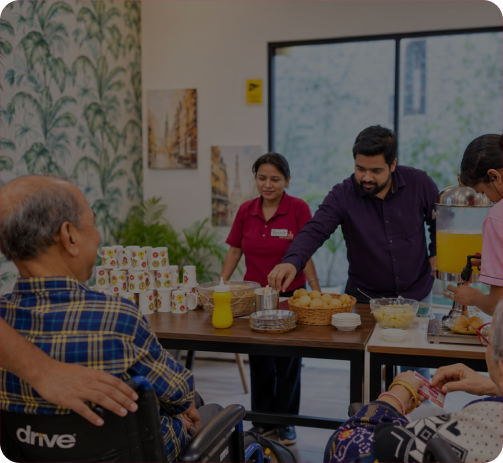
Food is how many elders take part in the festival, and removing it can quietly remove them from the celebration. A shared plate is a daily rhythm, a social moment and a link to the past, all at once.
- Lifestyle: festive meals keep the shape of the year familiar, with the same dishes arriving at the same time.
- Engagement: helping to stir, pour or arrange sweets gives elders a purposeful role.
- Reminiscence: the smell of cardamom or roasted flour can bring back a mother’s kitchen or a courtyard full of family.
- Normalcy: eating the same festival food as everyone else helps an elder feel like a full member of the family, not a patient.
When food is adapted thoughtfully, your elderly loved one still feels included, and this is what makes the difference. The goal is to change the recipe, not the celebration.
Recipe 1: Almond-and-Oats Laddoo, a diabetic-friendly Diwali sweet
This is a softer, lighter take on the traditional besan laddoo, made for elders who need to watch their sugar. The original uses refined sugar and a generous amount of ghee. This version uses a small amount of dates and relies on fibre-rich oats and almonds instead.
- Ingredients: 1 cup rolled oats, ½ cup almonds, 4 to 5 soft pitted dates, 1 tsp ghee, ½ tsp cardamom powder
- Method: dry roast the oats until fragrant and grind to a coarse powder. Grind the almonds to a fine powder. Warm the ghee, add the dates and mash until soft. Mix everything with the cardamom and shape into small laddoos.
How it differs and why it helps: there is no refined sugar, and the oats and almonds add fibre and protein, which are generally considered helpful for steadier blood sugar. Dates still contain natural sugar, so please ask your doctor what portion is suitable. Keeping the laddoos small also helps. If chewing is a concern, make sure the nuts are ground very fine.
Recipe 2: Silky Rice Kheer, a soft sweet for chewing and swallowing difficulties
This is a smooth version of the familiar kheer, made for elders who find chewing or swallowing hard. The original contains whole rice grains, chopped nuts and raisins, which can be difficult. This version is cooked until very soft and blended smooth.
- Ingredients: 2 tbsp rice, 1 cup full-fat milk, 1 tbsp jaggery or sugar, ½ tsp cardamom powder, 1 tsp very fine almond powder
- Method: simmer the rice in the milk until completely soft. Blend until silky and free of lumps. Stir in the jaggery, cardamom and almond powder, then warm gently. Serve warm and not hot.
How it differs and why it helps: removing grains, whole nuts and raisins lowers the choking risk and makes eating easier and more relaxing. The right thickness differs from person to person, so please ask the doctor or a speech and language therapist which texture is safe, such as one of the levels in the IDDSI framework. Seat your elderly loved one upright while eating, and stay with them. If they also manage diabetes, check the sugar with your doctor.
Why is it important to consult your doctor before Diwali?
Your doctor knows your elderly loved one’s health, medicines and limits, and no general tip can replace that advice. A short conversation before the festival can prevent a difficult evening.
- Ask about sugar: which sweets, portions and timings suit them
- Ask about texture: whether foods should be soft, minced or smooth
- Ask about medicines: whether any foods or drinks should be avoided
- Ask about fluids and fasting: how to keep them hydrated, and whether any fasting is safe
Write the answers down and share them with everyone cooking or serving, so the same care follows your elderly loved one from kitchen to table.
How can you build a safe Diwali sweet menu around your doctor’s advice?
Start with what your doctor says is safe, then build the sweets around those limits. Think in terms of choices, not restrictions.
- Offer a small sample plate with a taste of two or three sweets
- Adapt favourites by changing the texture, sugar or portion size
- Serve earlier in the day when digestion is usually easier
- Pair sweets with a balanced meal and not on an empty stomach
- Keep water and warm drinks nearby
How can you keep Diwali sweet and safe for your elderly loved one?
A safe Diwali is not a plain one. It is a festival where your elderly loved one still gets to taste, share and remember, with the food adapted around their needs. A small portion of a favourite sweet, served the right way, can mean more than a full plate eaten with worry. Ask your doctor, adapt thoughtfully and enjoy the moment together. Every elder is different, so please personalise these suggestions with a doctor.