What families need to know about elder care services in Delhi, Gurgaon, Pune and across India
What exactly is a continuing care model, and how is it different from a regular old age home?
For most of India's history, elder care meant one of two things: the family took care of ageing parents at home, or, when that became impossible, the elder moved into a traditional old age home. The old age home model was largely custodial. It offered shelter, meals and basic supervision. What it rarely offered was genuine clinical support, personalised engagement, or the ability to adapt as the elder's health needs changed over time.
A continuing care model is fundamentally different. Rather than placing an elder in a fixed type of facility and leaving them there, it builds a structured, evolving framework of support that can flex and deepen as the individual's needs change, across physical health, cognitive health, emotional wellbeing and daily functioning. The care spectrum encompasses diverse options, from independent living communities to assisted living facilities, specialised memory care units for those with cognitive challenges, and comprehensive Continuing Care Retirement Communities, enabling seniors to seamlessly adjust their level of support as their requirements evolve, ensuring they can age gracefully in a supportive setting.
The key difference is that in a continuing care model, the elder does not have to move whenever their condition changes. The care moves to them.
What are the different stages within a continuing care model?
There are generally four levels of care within a continuing care framework: independent living, assisted living, skilled or nursing care, and continuing care communities that integrate all of these. Understanding what each stage looks like in practice helps families plan ahead rather than react in a crisis.
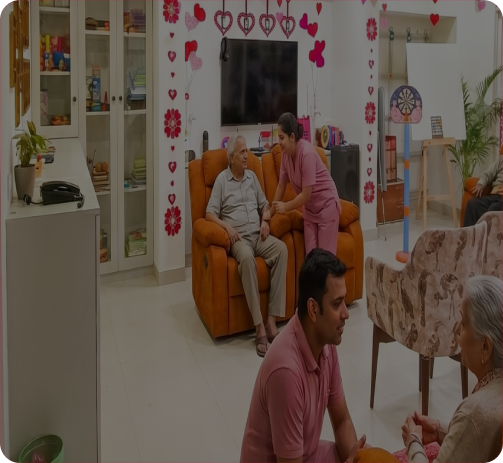
- Independent Living is the entry point for many elders who are mobile, cognitively intact and largely self-sufficient but who benefit from a safe, structured community environment. At this stage, the elder lives in their own space, an apartment or room, within a community setting. They manage their own daily activities, but they have access to meals, housekeeping, social programmes, transport and on-call support if needed. The primary value here is community, safety and the gradual removal of the burden of running a household, freeing the elder to focus on living, not logistics.
- Assisted Living comes into play when an elder begins to need support with activities of daily living, getting dressed, bathing, managing medications, navigating mobility challenges or managing a chronic condition. At this stage, trained caregivers and nursing staff provide structured, hands-on support while still preserving as much independence and dignity as possible. The care plan becomes more formalised, with regular assessments, medication management and coordination with doctors. Critically, the elder still lives in a community, not a hospital, and continues to participate in social, recreational and therapeutic activities.
- Skilled Nursing and Clinical Care is reserved for elders who require consistent, medically supervised care, following a surgery, a stroke, a fall, or during a period of acute illness. At this level, qualified nurses are present around the clock, vital signs are monitored regularly, physiotherapy and rehabilitation may be ongoing, and the medical dimension of care takes centre stage. This is not a permanent state for every elder; many recover from a clinical episode and return to a lower level of care. What matters is that the transition is smooth and supported, not disruptive.
- Memory Care is a specialised stream within the continuing care model, designed specifically for elders living with dementia or other cognitive conditions. It operates alongside, not instead of, the other care levels, and is discussed in detail below.
What happens when an elder develops dementia, and how does continuing care respond?
This is one of the most important questions families face, and one of the clearest illustrations of why the continuing care model is so much more suited to the realities of ageing than any single-type facility.
Dementia is not a sudden event. It is a progressive condition that unfolds across stages, from mild cognitive impairment and early-stage forgetfulness, through moderate dementia with more pronounced memory loss and behavioural changes, to advanced dementia requiring full-time, specialised support. The World Health Organisation projects that the prevalence of dementia in India will double by 2030, underscoring the growing need for specialised memory care services. In a traditional care setting, an elder who develops dementia often has to leave and find a dementia-specific facility, breaking established routines, leaving familiar faces behind and undergoing a transition that can significantly accelerate cognitive decline. In a continuing care model, this does not have to happen.
Early Stage, Identifying the signs and responding swiftly
When early signs of cognitive decline are observed, the care team acts immediately rather than waiting for the condition to worsen.
- Formal geriatric and cognitive assessment is initiated
- Care plan is reviewed and updated to reflect the new clinical picture
- Targeted cognitive stimulation interventions begin, including structured activities, memory exercises and consistent daily routines
- Reminiscence therapy and music-based engagement are introduced to slow the rate of decline and support emotional wellbeing
Moderate Stage, Deepening the care around the person
As dementia progresses, the care plan evolves in step, without the elder ever having to leave their home or their community.
- Caregivers trained in dementia-specific communication and de-escalation techniques take a more active role in daily support
- The physical environment is adapted, with clear signage, familiar objects, reduced sensory overload and secure outdoor spaces
- Behavioural and psychological symptoms, including agitation, wandering, sleep disturbances and emotional volatility, are addressed through non-pharmacological approaches first, structured routines, therapeutic engagement and caregiver consistency
- Medical input is brought in where necessary, working alongside the care team rather than replacing it
Advanced Stage - Comfort, dignity and the preservation of identity
In advanced dementia, when verbal communication may be limited, and full physical assistance is required, the philosophy of care becomes its most important asset.
- Skilled nursing support manages clinical needs around the clock
- Nutritional management, skin care and hygiene are delivered with sensitivity and respect
- Familiar caregivers remain present; continuity of relationship is treated as a clinical necessity, not a courtesy
- The focus shifts entirely to comfort, dignity and ensuring the elder is known, seen and valued as a person, not defined solely by their condition
Leading care providers now build their models on one foundational understanding: that a senior's needs will change, and that the care around them must change with it, not the other way around.
What if an elder's care needs change for reasons other than dementia?
Dementia is only one reason an elder's care needs might escalate. In a realistic picture of ageing, change can come from many directions, and the continuing care model is designed to respond to all of them. Below are the most common scenarios families encounter, and how a well-structured continuing care model handles each one.
Acute events, when change happens overnight
Some shifts in care needs are sudden and dramatic. A fall, a fracture, a cardiac event or a stroke can transform an elder's care requirements within hours.
- A hip fracture, for instance, can take an elder from assisted living to skilled nursing care overnight
- Following surgery, intensive physiotherapy, wound care, pain management and supervised mobility training are required
- In a continuing care model, this transition is managed internally; the elder does not leave their community or their caregivers
- Once the acute phase passes, the elder is gradually stepped back to their previous level of care as they regain strength and function
Chronic conditions, when change happens gradually
Not all escalation is sudden. Many elders live with conditions that progress slowly over months or years, quietly demanding more clinical support over time.
- Conditions like Parkinson's, diabetes, heart disease and COPD follow this trajectory, manageable early on, more complex with time
- In a continuing care model, progression is tracked through regular reassessment, typically quarterly, or immediately following any clinical event
- The care plan is updated to reflect the new reality at each review point
- Because care is delivered within a single integrated framework, nothing falls through the cracks; there is no handoff between disconnected providers, no loss of clinical history, no starting over
Post-operative and short-term recovery care
Not every elder who enters a care facility is there permanently. Many families seek professional care for a defined recovery period, with the goal of returning the elder home once they are stable and strong.
- Following a cardiac procedure, joint replacement, or serious illness, professional supervised recovery can make a significant difference to outcomes
- A time-bound, goal-oriented care plan focuses specifically on restoring maximum functional independence
- Physiotherapy, nutrition support, medication management and clinical monitoring are coordinated within one setting
- Once recovery goals are met, a structured transition plan supports the elder's return home, with guidance for the family on how to continue their care
The common thread across all of these scenarios is continuity. In a continuing care model, the elder is never a stranger to their care team, and that familiarity is not incidental. It is one of the most clinically significant advantages the model offers.
How does a continuing care model benefit the family, not just the elder?
The impact of a well-structured continuing care model extends far beyond the elder themselves. As families become more nuclear and urban migration continues, elder care is moving from a home-based responsibility to a structured, professional ecosystem. For the adult children and family members of an ageing parent, the continuing care model offers something invaluable: informed, consistent, transparent partnership.
A single point of accountability, ending the chaos of fragmented care
One of the most exhausting realities of managing an ageing parent's care in India today is the number of disconnected providers a family has to coordinate: a home nurse, a hospital, a physiotherapist, a specialist, a pharmacy. Each knows only their part of the picture.
- In a continuing care model, one integrated team holds the complete clinical and personal picture of the elder
- Progress is tracked continuously, not episodically
- Concerns are flagged early, before they become crises, and communicated proactively to the family
- Families are partners in care reviews, not recipients of occasional updates
- This single point of accountability dramatically reduces the anxiety, guilt and exhaustion that so many Indian families carry when navigating elder care across disjointed systems
Respite for family caregivers, a need that is too often ignored
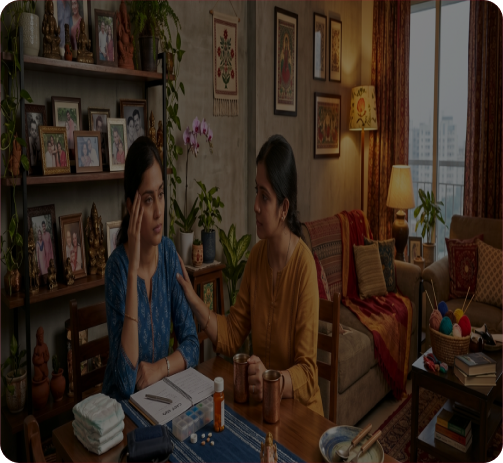
Caregiver burnout is one of the most underacknowledged challenges in Indian elder care. When one family member, most often a daughter, daughter-in-law or spouse, becomes the primary caregiver for an ageing parent, the personal, professional and emotional cost is significant and cumulative.
- Dementia daycare programmes offer a structured, supervised daytime care solution for elders living at home
- During the day, the elder receives cognitive stimulation, therapeutic activities, meals and professional support
- The family caregiver, meanwhile, can work, rest, manage their household or simply take the time they need
- This model delays the need for full-time residential care, often by months or years
- It also preserves the quality of the relationship between the elder and their family, because the caregiver is no longer depleted by round-the-clock responsibility
Peace of mind, the thing families are really looking for
Beneath every practical concern about elder care, the right facility, the right staff, the right programmes, is one fundamental need: to know that someone they love is safe, seen and genuinely cared for.
- A continuing care model, by its very nature, builds this assurance into its structure
- Because the care team knows the elder as an individual, their history, their habits, their preferences, their fears, care is never generic
- Families do not have to choose between living their own lives and ensuring their parent is well looked after
- That is not a compromise. That is what good elder care is supposed to make possible.
What role does personalised care planning play in continuing care?
A continuing care model is only as good as the individualisation within it. Generic routines and standardised protocols have their place, but they are never sufficient on their own. Every elder brings with them a lifetime of habits, preferences, relationships, fears and joys, and a care plan that ignores this context will always fall short.
Where it begins: the comprehensive geriatric assessment
Personalised care planning does not start when something goes wrong. It starts on day one, before the elder has even settled in.
- A comprehensive geriatric assessment is conducted at admission, covering cognitive function, physical health, nutritional status and emotional wellbeing
- Social history is documented: who the elder is, not just what condition they have
- Daily living capabilities are mapped in detail, what they can do independently, where they need support, and what matters most to them in their daily life
- The resulting care plan specifies not just medical needs but preferred wake times, dietary preferences, meaningful activities, communication styles and the nature of family involvement
- This is the document that guides every caregiver, every day, and it is built around a person, not a diagnosis
What a good care plan actually covers
A personalised care plan in a continuing care setting goes well beyond a clinical checklist.
- Physical health, medication management, chronic condition monitoring, mobility support, physiotherapy goals
- Cognitive health, level of stimulation required, memory support strategies, engagement activities matched to ability and interest
- Emotional and social wellbeing, preferred social interactions, triggers to avoid, activities that bring comfort or joy
- Nutritional needs, dietary requirements, texture preferences, assistance needed at mealtimes
- Family involvement, how often, in what capacity, and how the family wishes to be communicated with
- Personal preferences, the details that make daily life feel familiar and dignified, from how the elder likes their morning tea to the music they find calming
Why the plan must never be static
The most important thing about a personalised care plan is that it evolves, because the person it is built around is always changing.
- Formal reassessments are conducted regularly, typically quarterly or following any significant clinical event
- But good continuing care does not wait for a scheduled review to respond to change
- Caregivers are trained to observe and document the quieter shifts: the elder who stops eating their favourite meal, the one who has become reluctant to leave their room, the one whose sleep has changed
- These observations are clinically significant; they are often the earliest indicators of a new health development, a change in mood or the onset of cognitive decline
- In a well-run continuing care home, every observation is documented, discussed and acted upon, not dismissed as a passing phase
The difference between adequate care and truly good care often lives in these details. A caregiver who notices that an elder who once loved morning walks has stopped going outside is not just making a casual observation; they are doing their job. And in a continuing care model, that observation has a pathway: it is heard, recorded and responded to.
Why is the continuing care model particularly relevant in cities like Delhi, Gurgaon and Pune?
India's urban centres are where the pressures of demographic ageing and changing family structures converge most acutely. Adult children in Delhi NCR, Gurgaon and Pune are often working full-time, managing their own families and living in homes that were not designed with ageing parents in mind. The infrastructure of informal care, extended family, neighbourhood networks, and domestic help with caregiving experience is under strain. And the gap between what families can provide at home and what a medically complex, ageing parent actually needs is widening every year.
The urban reality: why home-based care is no longer always enough
- Nuclear families in cities like Gurgaon, Delhi and Pune rarely have a full-time family member available to provide consistent, skilled elder care
- Urban homes are often not designed for ageing: no ground floor access, narrow bathrooms, no space for a live-in caregiver
- Domestic helpers, however dedicated, are not trained caregivers; they cannot manage medications, recognise early signs of cognitive decline or respond to a medical emergency
- The emotional weight of being the sole caregiver, on top of professional and personal responsibilities, leads to burnout that ultimately affects the quality of care the elder receives
- Families in these cities are not looking for an easy way out, they are looking for a genuinely better option
A growing market reflecting a genuine need
- India's senior care market represents a USD 12 billion opportunity that is only beginning to be unlocked
- Cities like Gurgaon, Gurugram, Delhi NCR and Pune are at the leading edge of this transformation, where demand is highest and professional care infrastructure is developing fastest
- International models from the United States, Europe and Australia are being thoughtfully adapted to the Indian context, preserving family-centred values and multigenerational connections while introducing global standards of clinical care and community living
- Elder care homes in Gurgaon and Delhi NCR are increasingly designed not just for safety and supervision, but for genuine quality of life, green spaces, community programmes, therapeutic engagement and dignified, personalised care
A cultural shift that is already underway
Perhaps the most significant change is not structural; it is attitudinal.
- The perception of senior living in India is shifting from stigma to considered choice
- Families are beginning to see professional elder care not as abandonment but as an act of love, one that gives their parent access to consistent, expert, community-embedded care that no single family member can replicate alone
- The guilt that once accompanied the decision to seek residential elder care is giving way to a more honest conversation about what ageing parents actually need, and what families can realistically provide
- Elder care homes in Delhi NCR, Gurgaon and Pune that offer genuine continuing care, not just accommodation, are at the forefront of this shift, redefining what it means to grow old with dignity in an Indian city
The families making these decisions today are not choosing between love and care. They are choosing the form of care that love, at this stage of life, most responsibly takes.
What should families look for when choosing an elder care home in India?
Choosing the right elder care facility is one of the most consequential decisions a family will make. Here are the most important criteria to evaluate:
- Accreditation and clinical standards. NABH certification is one of the most reliable independent markers of quality and safety in Indian elder care. It indicates that the facility has been assessed against rigorous standards for clinical care, infection control, staff training and resident rights.
- Continuity of care. Ask explicitly: what happens if my parent develops dementia, has a fall, or needs post-operative care? A good continuing care facility will have a clear, confident answer, because they have planned for it.
- Staff training and consistency. Geriatric care requires specialised skills. Ask about dementia-specific training, caregiver-to-resident ratios, and how the facility manages staff continuity, because consistent relationships between caregivers and elders are not a luxury; they are a clinical necessity.
- Personalisation. A facility that cannot describe how it tailors care plans to individual residents is not truly practising continuing care; it is practising managed accommodation.
- Family involvement. The best elder care homes treat families as partners, not visitors. Regular communication, care plan reviews and open-door policies are the hallmarks of a facility that is confident in its care.
India is at an inflection point in how it thinks about, organises and delivers care for its oldest citizens. The continuing care model, with its commitment to personalisation, clinical depth and seamless transitions across life's changing chapters, represents the most humane and effective response to the complexity of ageing that the country has yet developed. For families navigating elder care services in Delhi, Gurgaon, Gurugram, Pune or anywhere across India, understanding this model is the first step toward making a choice they can feel at peace with, for themselves, and for the person they love.