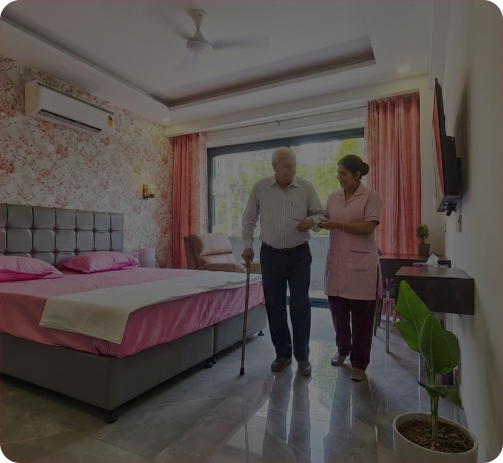
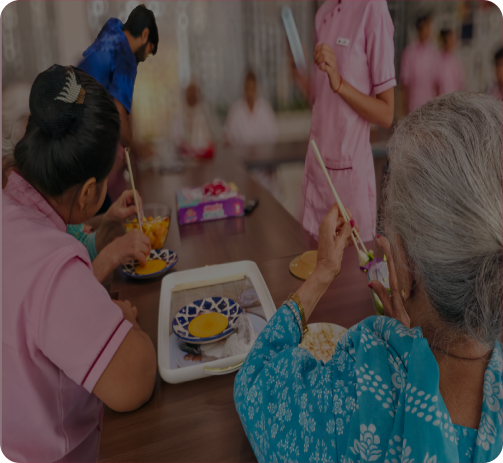
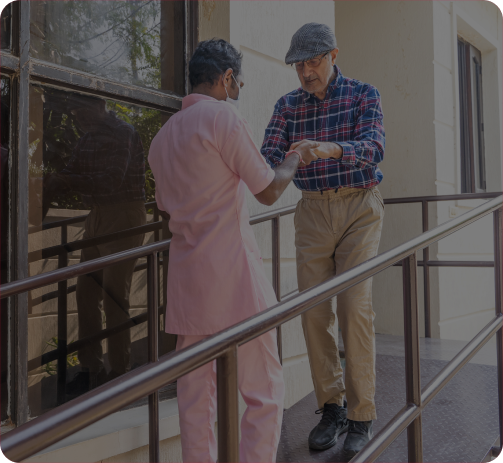
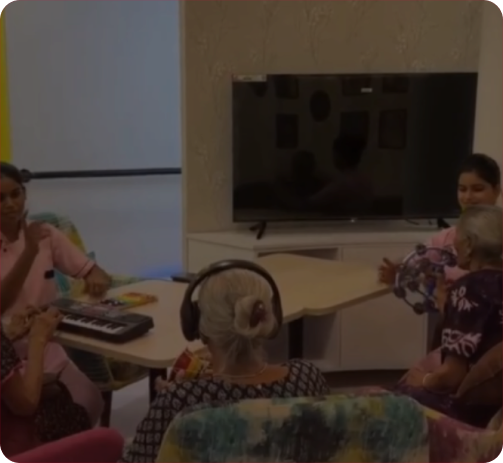
When an elder enters a retirement home or a care home, it is rarely a simple relocation; it is a shift in identity, autonomy, and emotional balance. Families often arrive wondering what the future holds, and elders carry their own mix of hope, hesitation, and unfamiliarity. In such a context, care cannot be static. It must evolve with aging, adjust to changing medical realities, and support emotional well-being. Aging is not linear, and neither is elder care.
Modern elder care has therefore moved toward a continuum-based approach, where a single diagnosis or stage of dependency does not define support. Instead, it transitions gently, thoughtfully, and clinically, from one level to another, ensuring that elders remain rooted in familiarity even as needs change.
Below, we explore what transitioning care really looks like, how it unfolds over time, and why emotional and clinical alignment make all the difference.
What Stages Can Care Transition To?
Within a complete continuum, care may move across the following broad pathways:
Assisted > Memory or Mobility Focused > Palliative/Comfort Care
The key is that each transition reduces disruption. Elders are not uprooted repeatedly. Instead:
- Staff already know their histories: Because caregivers already understand an elder’s medical background, habits, and preferences, they can adjust care without starting from scratch. This continuity reduces anxiety and prevents gaps in treatment or communication.
- Routines remain intact: Daily rhythms, such as meal timings, bathing routines, or preferred activities, stay consistent even as care levels change. Familiar structure helps elders feel grounded and reduces confusion, especially during cognitive or physical transitions.
- Emotional stability is preserved: Without repeated relocations or new environments, elders maintain a sense of security and belonging. Familiar faces and familiar spaces buffer emotional stress, minimizing fear, withdrawal, or behavioral distress.
This is what turns a retirement home into a care ecosystem.
How Care Evolves for Different Elders’ Needs
1. Beginning with Light Assisted Living
For many elders, the journey begins with light assisted living, a space where independence is intact, but support is available. At this first stage, transitions are minimal. Elders may require structured help with Activities of Daily Living (ADLs) such as dressing, grooming, or medication reminders, yet retain autonomy over most decisions.
The purpose of care at this stage is not to intervene aggressively, but to:
- Preserve daily routines
- Strengthen functional abilities
- Build social engagement
- Prevent avoidable deterioration
This early care stage acts as the foundation upon which future transitions are built. The more stable and supported an elder feels now, the smoother the next stages will be.
2. Transitioning into Cognitive or Mobility-Focused Care
As time passes, transitions often emerge from two major domains: cognition and physical function. In conditions like dementia, alzheimers, or other neurodegenerative disorders, each stage of care needs to shift across various stages, according to the person and their condition.
3. Dementia: How Care Shifts Across Stages
When an elder begins showing signs of memory loss or dementia, care transitions gradually:
- Early Stage Transition:
The shift is light. Care focuses on routine-based orientation, cognitive stimulation, and emotional reassurance. Families are integrated early to maintain familiarity.
- Middle Stage Transition:
As disorientation, wandering, or communication challenges appear, care transitions again, now toward supervision, redirection, nutritional monitoring, and safety.
- Late Stage Transition:
Finally, the transition becomes comfort-centered: non-verbal communication, palliative support, sensory comfort, and full ADL assistance.
Each transition respects what remains, not just what is fading. Preferences, cultural habits, and retained abilities continue to guide care plans.
4. Movement Disorders: A Different Transition Pathway
Not all transitions are cognitive. For elders with Parkinson’s disease, stroke impacts, orthopedic issues, or other movement disorders, the trajectory is physical:
- Care may begin with physiotherapy and mobility support
- Transition to adaptive equipment and fall prevention
- Gradually evolve into transfer assistance and speech/swallowing therapy
In this pathway, the emotional transition is equally significant. Slowness, rigidity, or dependency can feel frustrating, and care teams must adapt communication, pacing, and expectations accordingly.
Both paths, cognitive and physical, highlight that transitioning care is not a single jump, but a sequence of micro-adjustments.
5. Short-Term Transitions: Rehabilitation and Post-Operative Needs
Not all elders enter care homes with long-term plans in mind. For many, the stay is temporary, often after a hospitalization, fracture, infection, or surgery, where the primary focus shifts to recovery and stabilization rather than decline. Short-term care typically involves wound care, physiotherapy, medication adjustments, nutritional support, vitals monitoring, and coordinated discharge planning.
In these cases, care is designed to move in reverse: from dependence to increasing independence, and ultimately back home if appropriate. This reinforces that a care environment isn’t only a destination, but a bridge that helps elders regain strength safely and confidently.
Additionally, short-term care often:
- Ensures continuity between hospital instructions, medical follow-ups, and home routines
- Supports families by reducing caregiver burden during the recovery window
What Factors Determine Care Levels?
Transitions in elder care are not decided randomly, nor driven solely by symptoms. They arise from structured, interdisciplinary assessments that consider multiple aspects of an elder’s health and functioning. These assessments help determine when care needs to shift and how to support that shift without disruption.
Key assessments include:
- Medical evaluations: to review diagnoses, vitals, medications, and treatment plans.
- Cognitive testing: to understand memory, orientation, and decision-making abilities.
- Functional assessments (ADLs/IADLs): to evaluate self-care abilities such as bathing, dressing, mobility, and meal preparation.
- Physiotherapy assessments: to measure gait, balance, strength, and fall risk.
- Behavioral observations: to track mood, agitation, sleep patterns, and engagement levels.
- Psychosocial evaluations: to understand emotional needs, coping patterns, and social connections.
- Nutrition assessments: to identify dietary needs, swallowing issues, hydration levels, and weight changes.
These assessments are not conducted in isolation. They are supported by input from a multidisciplinary team to ensure a holistic view of the elder’s condition.
Key contributors to these decisions include physicians, nurses, physiotherapists, clinical psychologists, caregivers, nutrition teams, and families. Working together allows transitions to be reviewed regularly, documented properly, and communicated clearly. This transparency also reduces fear and uncertainty, while proactive planning helps avoid crisis-driven changes. With thoughtful clinical oversight, care can evolve smoothly and humanely as an elder’s needs change.
But everything cannot be oriented only toward the condition. Taking into account the emotional dimension of transitional care is just as important; the emotions an elder goes through during those stages and how to make them feel respected, dignified, and safe is just as important as managing symptoms.
The Emotional Dimension: Why Transitions Must Be Human-Centered
Transitions do not only happen in charts, but they also happen in hearts. Different conditions demand different emotional responses because each stage affects how an elder feels, relates, and copes.
- Early cognitive decline: Mild memory lapses, slowed processing, or disorientation can feel frightening or embarrassing for elders. Gentle reassurance, calm explanations, and predictable routines help reduce anxiety and restore a sense of confidence and control.
- Moderate cognitive impairment: Confusion becomes more noticeable, instructions need repetition, and behaviors may become repetitive or withdrawn. Here, correction or confrontation increases distress; patience, redirection, and emotional validation create far better outcomes.
- Severe neurocognitive conditions: In later stages of Alzheimer’s, Parkinson’s with cognitive involvement, Lewy Body disease, or other neurodegenerative conditions, verbal communication may fade. Comfort then takes center stage through familiar music, scent, touch, and non-verbal presence, because connection remains possible even without words.
- Movement and motor disorders: Conditions like Parkinson’s disease, stroke after-effects, or other motor impairments can make everyday tasks slow, shaky, or dependent. This can evoke frustration or vulnerability. Preserving dignity, by allowing unhurried time, offering respectful assistance, and acknowledging effort, supports emotional well-being as much as physical safety.
- Post-operative or short-term recovery: After surgery, hospitalization, or fractures, elders may fear complications or doubt their abilities. Gentle motivation, confidence-building, and celebrating small wins help strengthen both emotional and physical recovery, reducing the risk of withdrawal or depression.
- Palliative and end-of-life stages: When priorities shift from cure to comfort, whether due to cancer, advanced organ disease, or end-stage neurodegenerative conditions, what matters most is presence, pain and symptom control, emotional peace, and honoring personal values, beliefs, and relationships.
Across these scenarios, elders often navigate identity changes, loss of autonomy, shifting roles within the family, and the quiet grief of losing abilities they once took for granted. Emotional care ensures that the person is never lost in the condition. This is where evolving care becomes humane care: when clinical support and emotional presence work together.
Holistic Care: The Framework That Makes Transitions Seamless
Holistic care is not an “extra.” It is the foundation that makes transitions possible without trauma. Instead of focusing on only one aspect of an elder’s health, holistic care weaves together clinical, functional, cognitive, nutritional, psychosocial, emotional, and environmental needs into a seamless support system.
At its core, holistic care brings together:
- Clinical stability and functional mobility (medical care + ADLs support)
- Cognitive stimulation, nutritional alignment, and emotional-spiritual well-being
- Emotional stability, understanding who the person is, and what matters to them
- Understanding what gives their life meaning or purpose, and working with them to build their world constructively.
This approach ensures that elders are not cared for only as patients, but as whole individuals with histories, abilities, fears, and preferences. When these components work in tandem, transitions begin to feel less like decline and more like adaptation, continuity, and dignity.
This is the essence of evolving elder care, one that respects the body, honors the mind, and nurtures the spirit through every stage of aging.
Final Thoughts
Evolving care is not about adding more services; it is about changing them at the right time, in the right way, with the right intent. The transition from assisted living to memory support, from mobility care to comfort care, or from rehab back home should feel coordinated, not chaotic.
A care home becomes more than a retirement home when it:
- Adjusts rather than relocates
- Understands rather than instructs
- Preserves dignity rather than just managing dependency
- Holds elders clinically, culturally, and emotionally through every stage
Because care goes beyond medicine and ADL management, it is the rediscovery of identity, the negotiation of changing abilities, and the quiet courage of adapting to what comes next. When care transitions with an elder instead of pushing them to fit a rigid system, it protects the most fragile parts of aging: autonomy, memory, belonging, and dignity. Care must evolve not simply to extend life, but to honor the life that has been lived, with tenderness, respect, and unwavering presence.